ABACAXI

South America, 2019

Setting the stage in Santiago

Administrative runs are boring, yes. Also, they are very essential. We knew South America quite well before starting this trip, though buying a local car in Chile was another story entirely and cost us more time and money than we  planned. 

Testing lemons

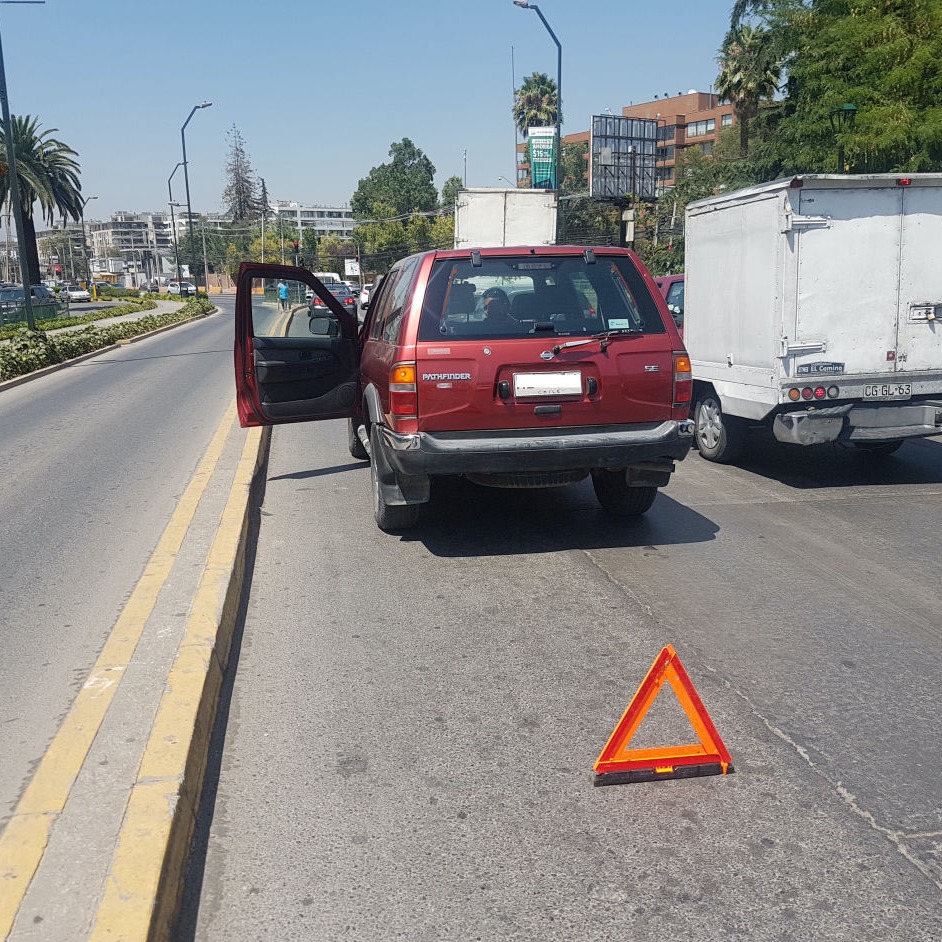
Finding the right overlanding car in Chile can be difficult. This Nissan Pathfinder broke down in the middle of the road 5 minutes into our test drive.

Why would you buy a car in Chile?

Note that this information is as of 2019 and things may have changed.

Based on our research we concluded that out of the countries we wanted to visit, Santiago is our best bet to get our travel ride. We did not own a 4x4 at the time and buying and equipping one in Europe and have it shipped over was budget wise out of the question. Renting is not an option either, as it does not make sense financially and probably would not have been possible for our route anyways.

Chile is a country with a fairly open economy and efficient public services, especially compared to neighboring countries. Also, it allowed foreigners to buy cars locally and have them registered in their name, which was one of our criteria. No "poder" (power of attorney) funky monkey business.
The administrative process was relatively straight forward and does not cost an enormous amount of money, though planning is needed. For instance, we needed to get a local tax number, RUT. There is a nice step-by-step cookbook article on how to do this on packtolife. We encountered a few limitations though: 1. we had to wait for the administrative process of ownership change to be completed before we could cross borders and 2. we were not allowed to leave Chile at a border post in the north when we wanted to go for a second short visit to Mendoza, Argentina towards the end of our trip with the reason that I was not a permanent resident in Chile (there seems to be a grey area legally and you can find a fair amount of discussions around this topic in forums).

Now, to the actual buying of a car. We planned for about two weeks in Santiago for this process. Yes, possible but not in our case. We used online portals such as chileautos.cl or economicos.cl to make appointments and to test drive cars. The problem was that cars within our budget (about 8K USD) just had too many flaws. We had some crazy experiences as well, such as a car breakdown 5 minutes into our test drive, or a car that was visibly involved in a car crash and "fixed" with bad soldering of the frame (!) and the seller insisted he did not know. The latter was obviously not visible on the ad photos and we made another unnecessary trip to the outskirts of Santiago in our rental car. Another car looked very well maintained, but when having it tested by a local garage during our test drive (this is absolutely recommended before buying any used car, ever!), the mechanic informed us that the "check engine" light bulb was probably removed - we did not notice this obvious fault!

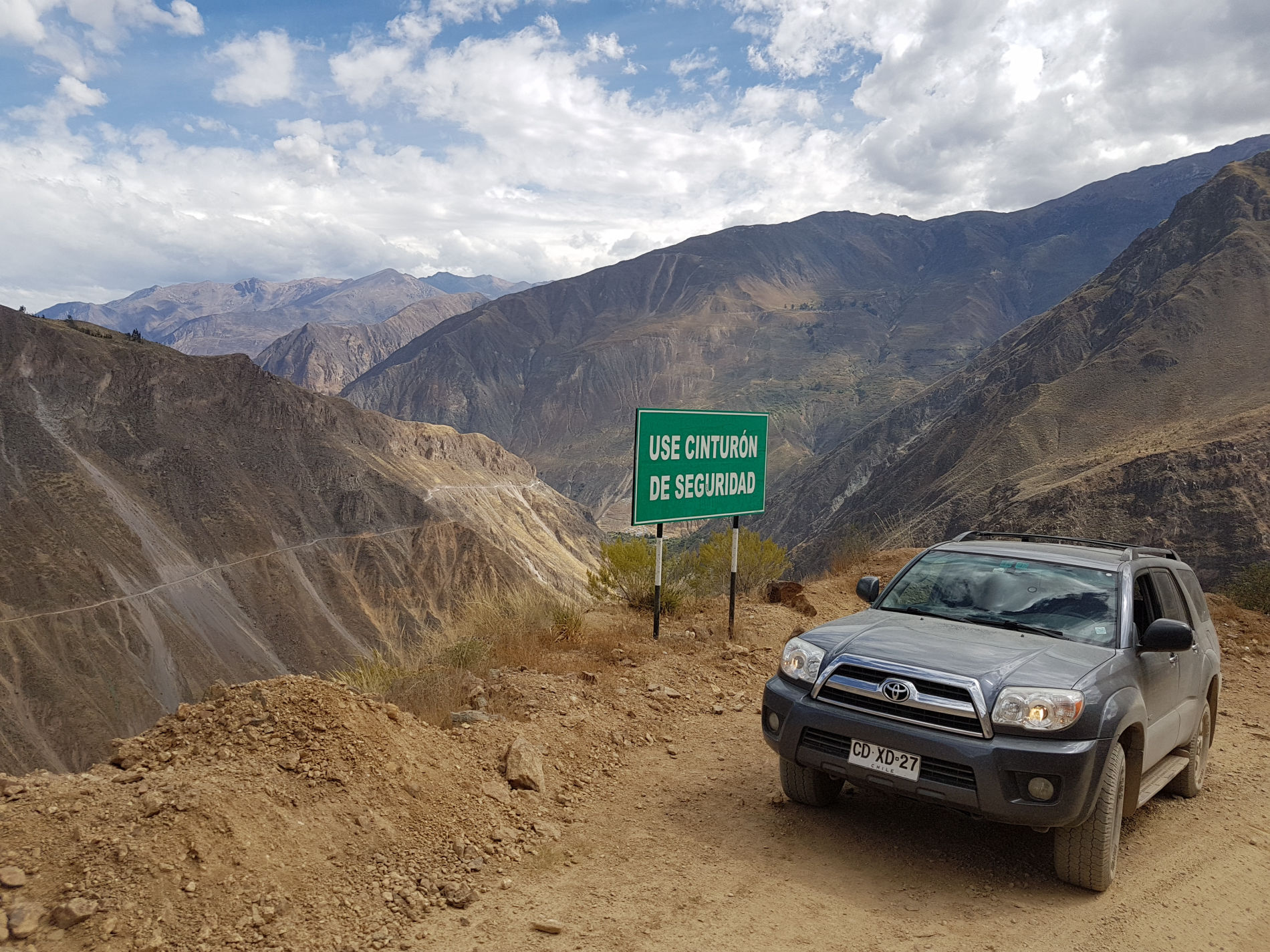
Long story short: we realized that increasing our budget was our best bet to get a reliable car that could be sold more easily and that was less prone to complications along the trip. We bought a used 2012 Toyota Four Runner from Portillo, the largest local Toyota dealership (and ended up selling it back to them). We had a great experience with them and would do it the same way again in the future.

An alternative I know of is buying an equipped car or van from Suzi, a company in Santiago that is specialized in serving overlanders that will also buy back the car (and sell it on to the next traveller). At the time, I spoke to them over the phone and somehow did not have the right feeling, so we did not consider this option.
Trip report overview

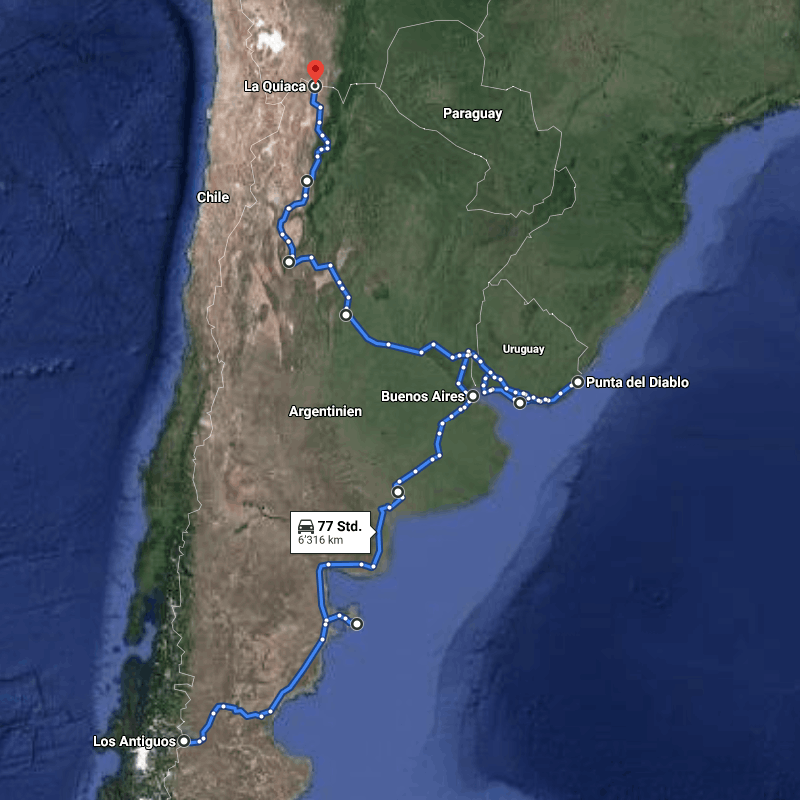
I grouped our six months on the road into four sections: the Chilean side of Patagona and its picturesque Carretera Austral, the drive thorough the Pampa up to Buenos Aires and then north of Argentina, the highlands, mountains and valleys of Bolivia and southern Peru, and finally, the deserts and beautiful valleys of northern Chile.

Map_Chile_Patagonia

I. Chile (south)

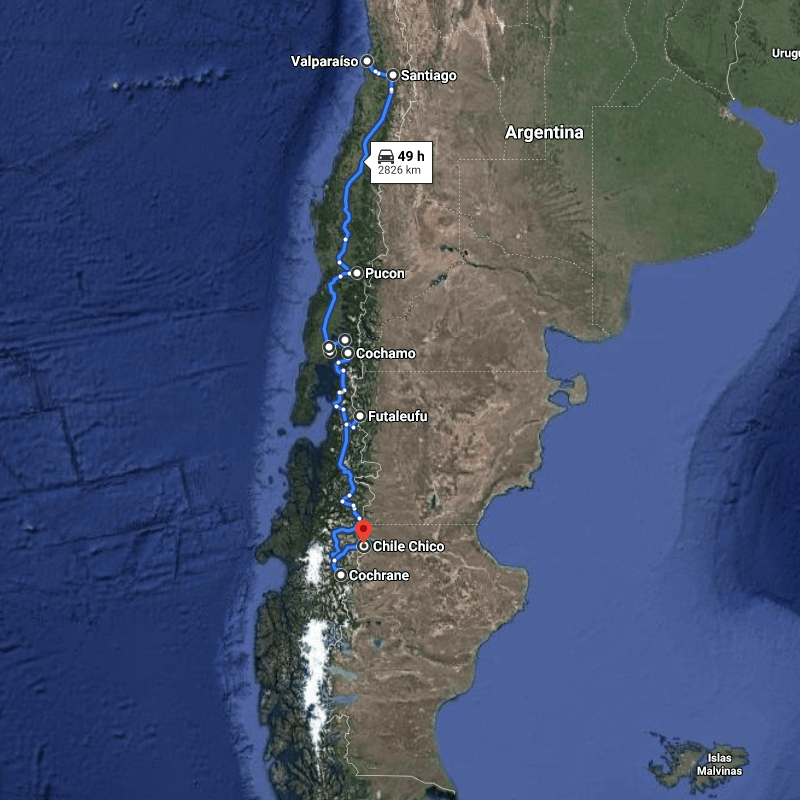
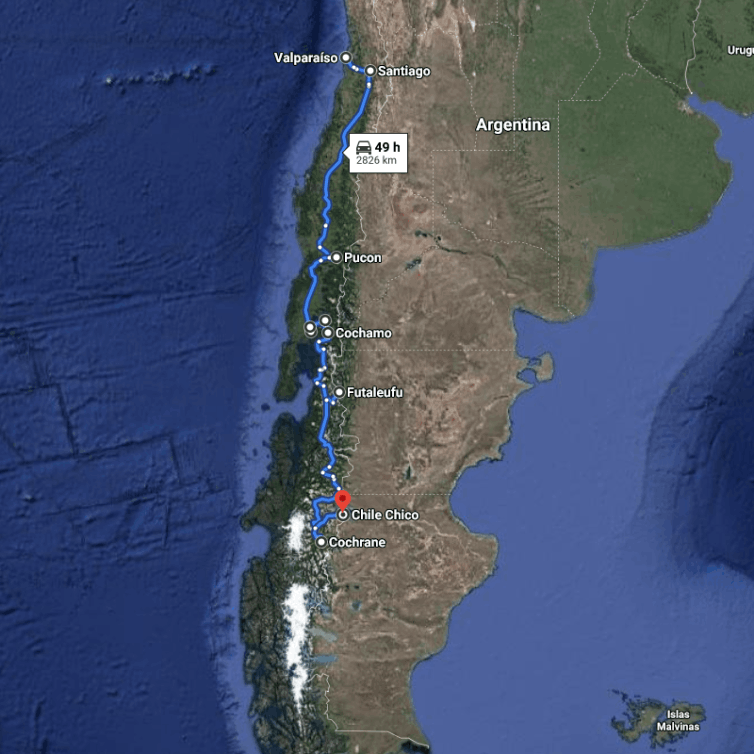
January to February, from Santiago de Chile down the Carretera Austral to Cochrane and the border crossing to Chile Chico. Approximately 3,500 km.

Map_Argentina

II. Argentina & Uruguay

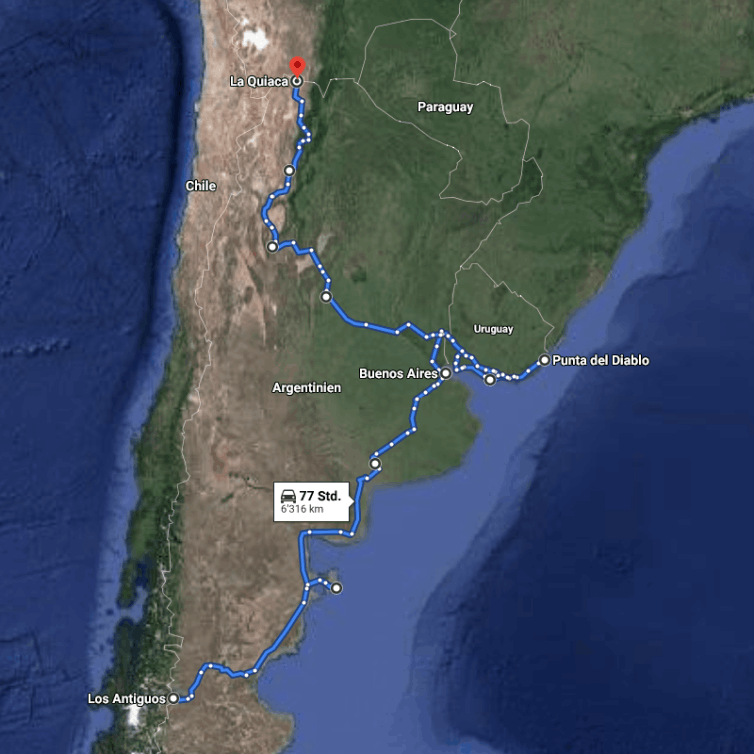
March and April, from Patagonia via Buenos Aires and Montevideo to Salta and Argentina's far north. Approximately 7,000 km over two months.

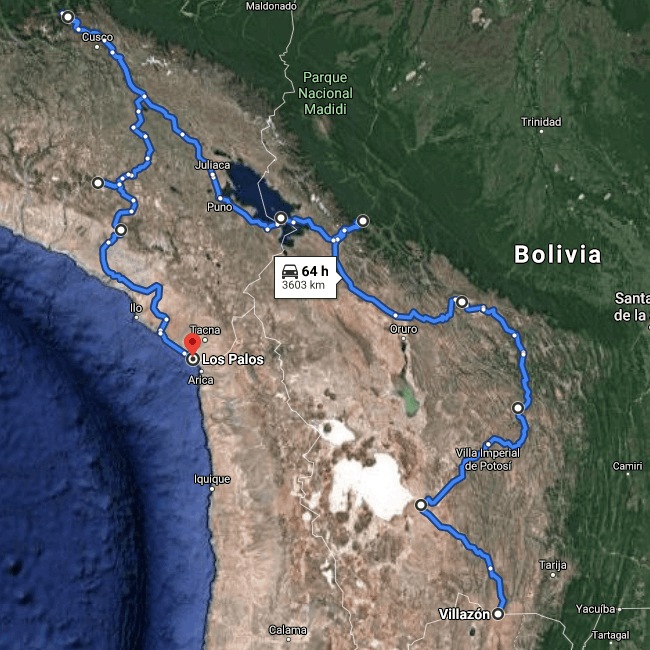
Map_Bolivia_Peru

III. Bolivia & Peru

May and June, from northern Argentina crossing into Bolivia, over the plateau into southern Peru. Approximately 4,000 km of thin air and bitter cold traveling.

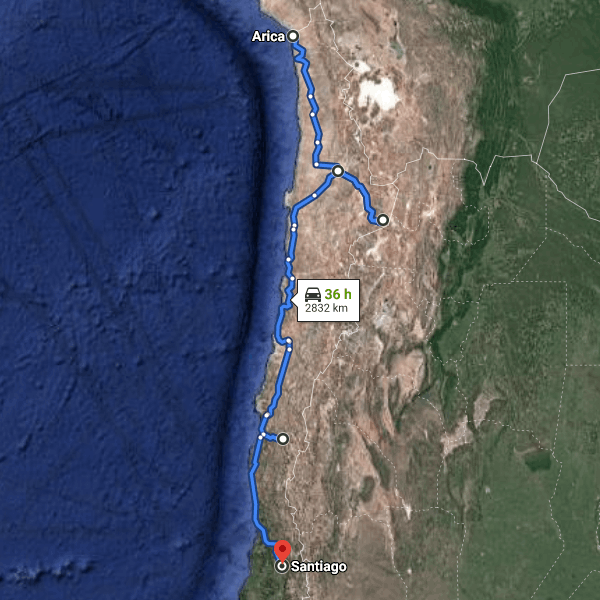
Map_Chile_North

IV. Chile (north)

July. Back from Peru down to Santiago. Approximately 3,000 km of desert with stopovers in Chile's beautiful valleys in the north and a failed crossing into Argentina.

I. Chile and the Carretera Austral

What I consider the most picturesque part of the trip with rough nature, the most beautiful rivers, and bad food.

Chile_south_map

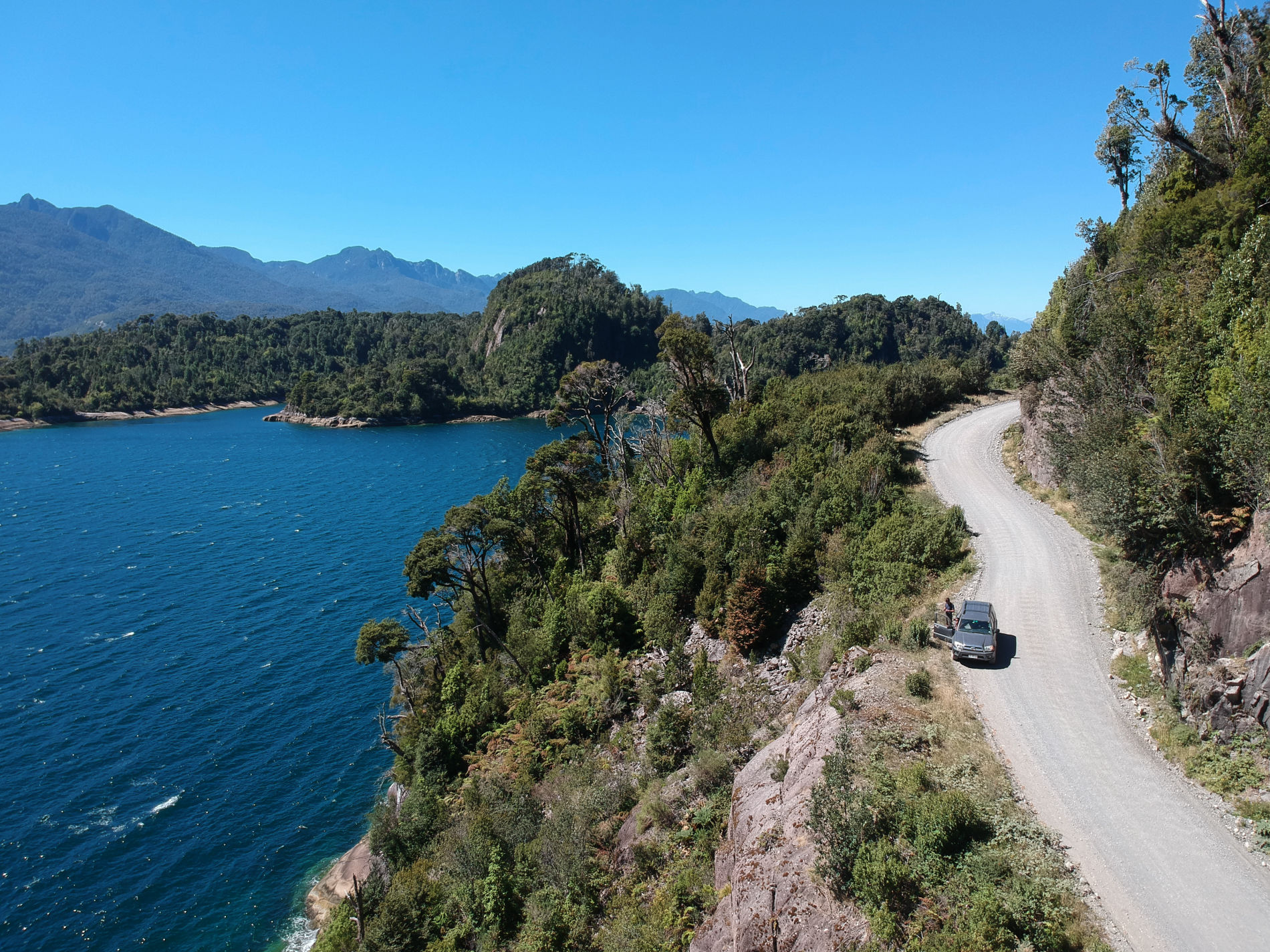
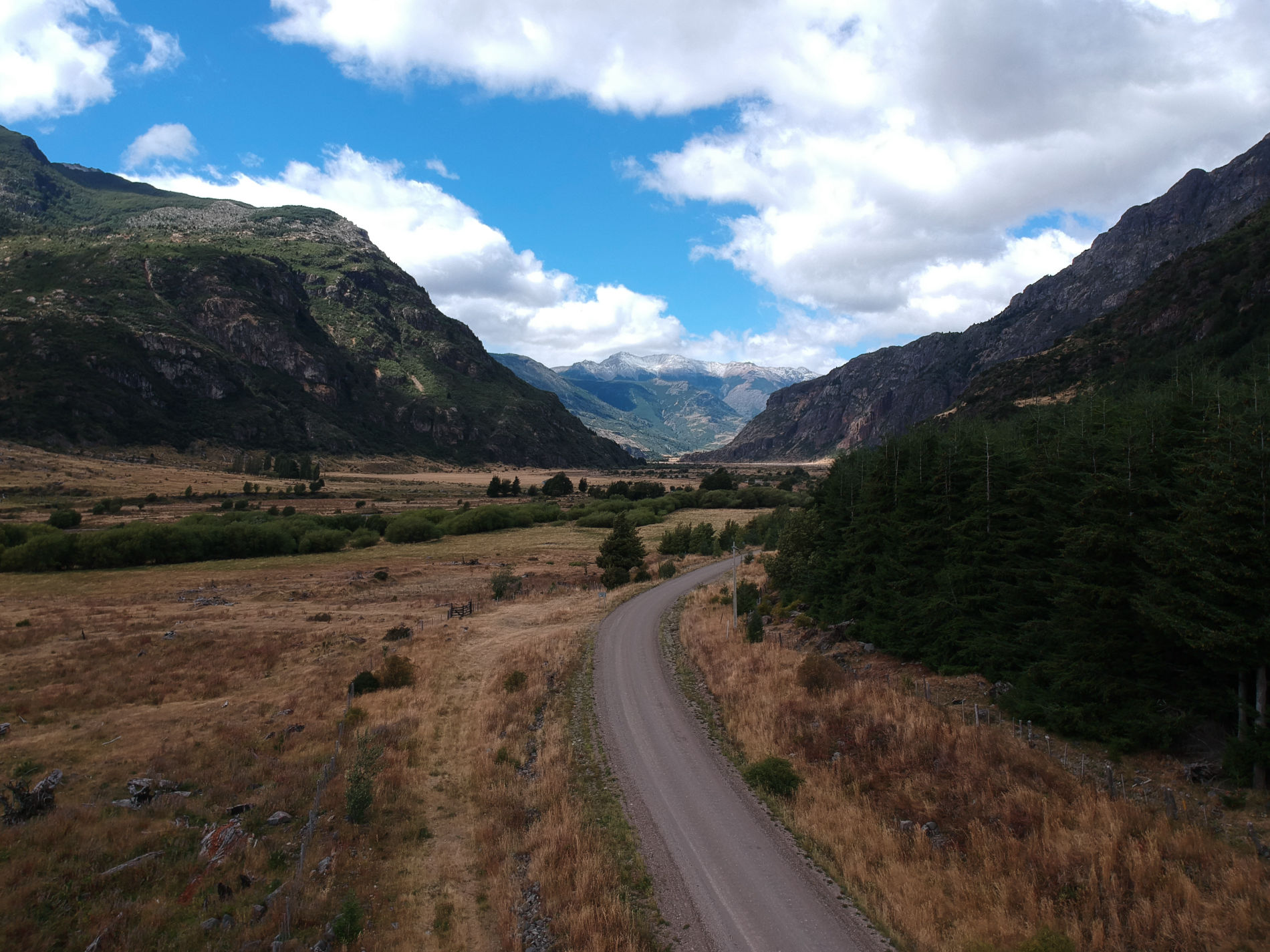
Santiago to Cochrane: at the time, the Carretera Austral was mainly unpaved and we enjoyed incredible landscapes.

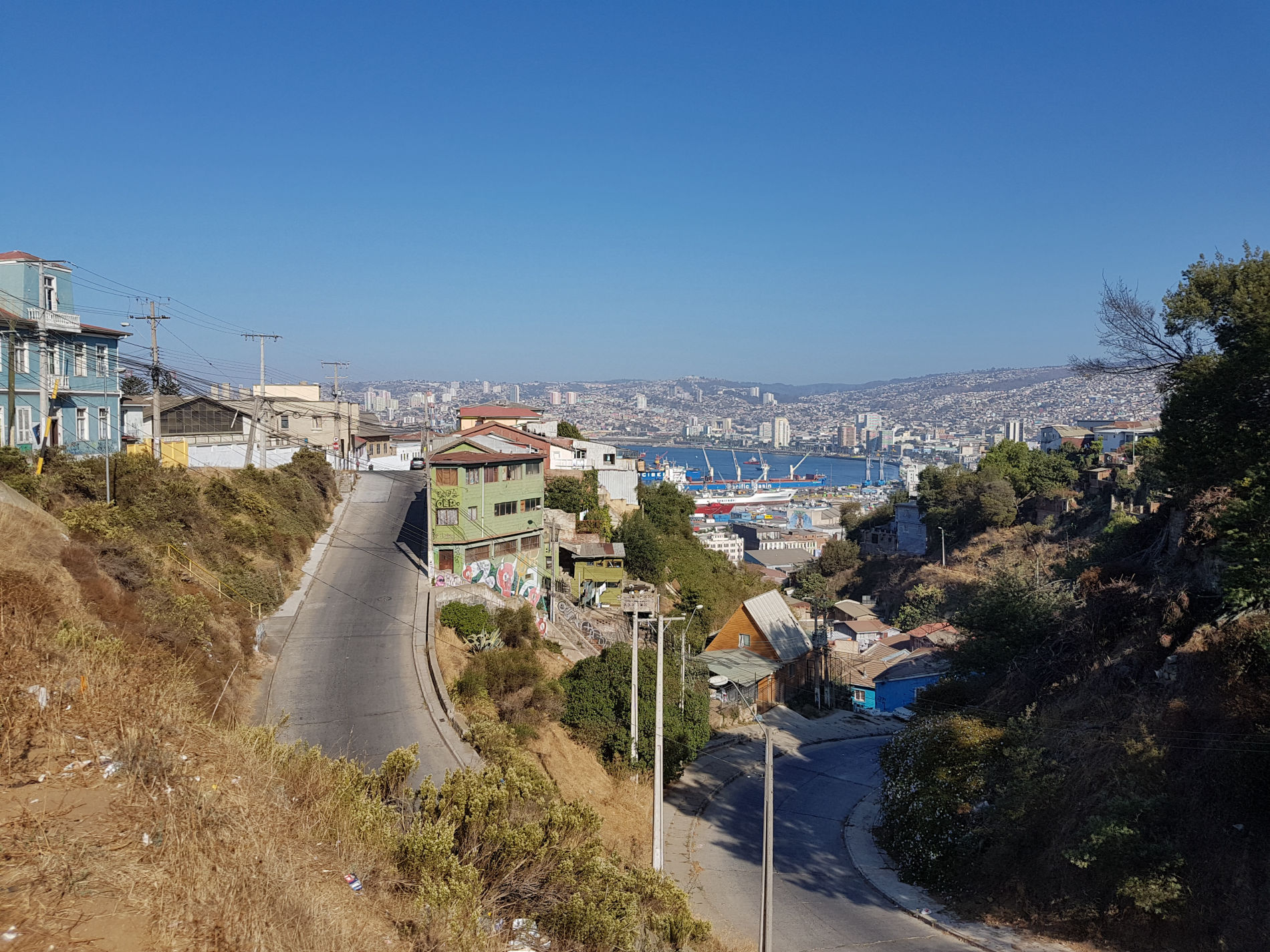
After finally getting the car we hit the road immediately. We still waited for a couple of papers in Santiago but had seen enough of the city and the heat became unberable, so we decided to drive to Valparaiso, which I remembered from the film Diarios de motocileta. We enjoyed being at the much cooler coast and checking out this port city.

After that, we went back to Santiago to visit again our friend Vincente and to pick up paperwork to make sure we can proof ownership of the car. Finally we were free to head south and would not be back for another six months.
Our first stop was the wine making region of Chile and further south, the popular weekend escape Pucon and its surroundings. So far, mainly perfect tarmac freeways. In Pucon, we could go on our first hikes and explore the beautiful volcanoes. Temperatures already dropped remarkably in this mountainous region. No wonder affluent Chilenos like to spend their free time here! Here, we realized that it is already becoming much harder to source equipment. Having spent a lot of time finding our car we did not have time in Santiago to buy camping gear (remember, we flew to Chile and could not bring over much). Luckily this happened to us, we now knew that our last chance to buy equipment will be in Puerto Montt, the city where the famous Carretera Austral begins.

Puerto Montt itself is not a beauty, so we decided to stay for a couple of days in Puerto Varas as our basis and to go for day trips to explore nearby nature, including Petrohue. We also went on a day trip to Puerto Montt and luckily, there is a department store selling camping equipment in the local mall. We bought a tent, inflatable mattress, a cool box, and a gas stove. Not much choice but we got all the basics! We also pre-booked our spot on the ferry leaving a few days later from Hornopiren (some parts of the Carretera Austral are connected by ferry crossings). We used the remaining days to explore the Reserva Nacional Llanquihue and decided to take the road east of the Estero Reloncavi. Up in the mountains we stayed our first night in a tent. A wild camp ground in the forest all for ourselves and we could even make a bonfire. The adventure has begun.

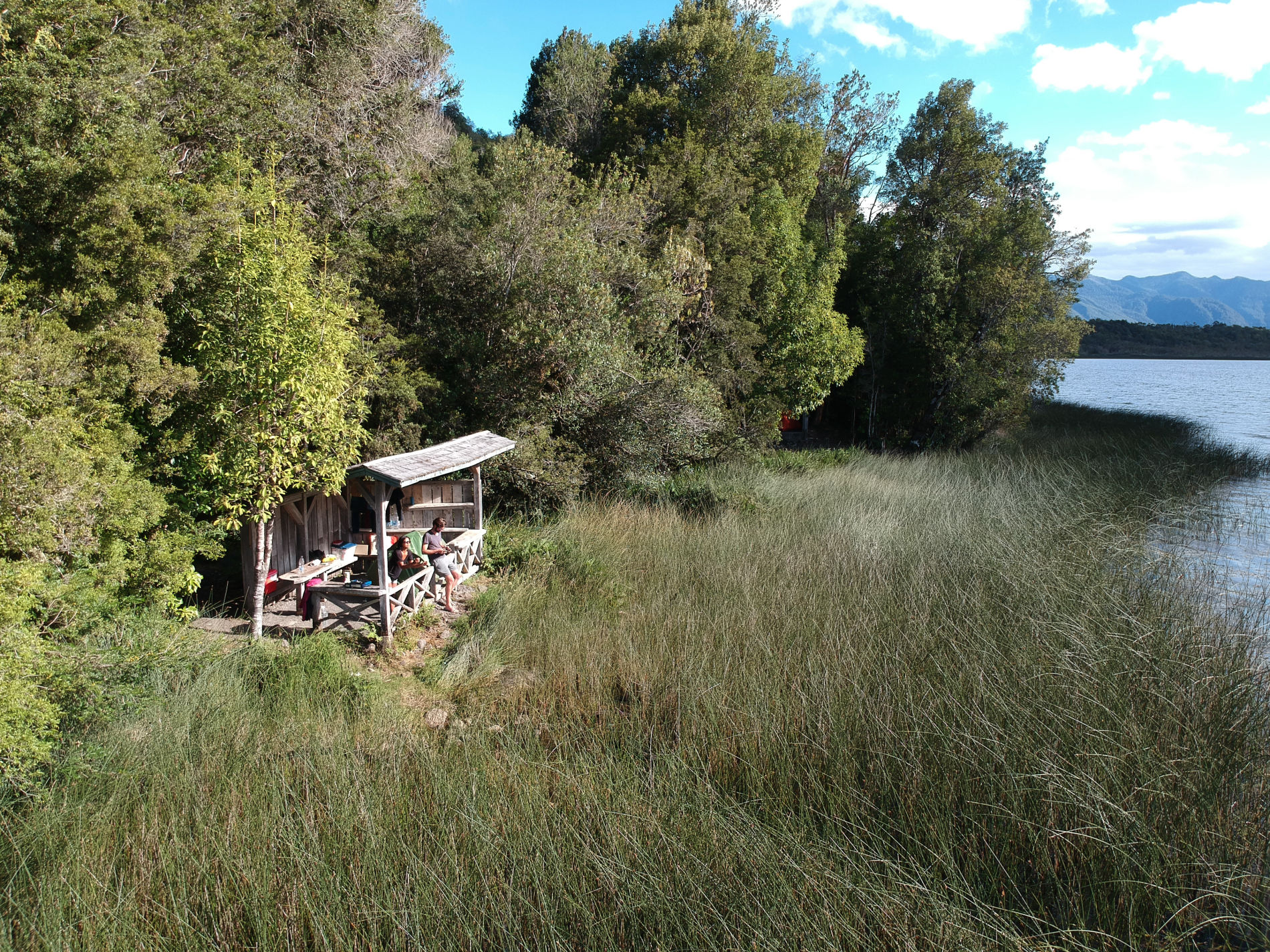
After the double-ferry crossing from Hornopiren we reached the Pumalin Park. This is where the "proper" Carretera Austral begins. The North Face founder turned this area in a beautiful reserve with several stunning hikes and very basic camp sites. We were lucky to get one of the four or so spots of the incredible Camping Lago Blanco (make no mistake, this is not a camp ground as seen in most places of the world). One evening, a couple cycling the Carretera Austral arrived at our camp, all wet and tired. Of course we would share our spot with the brave poor guys!

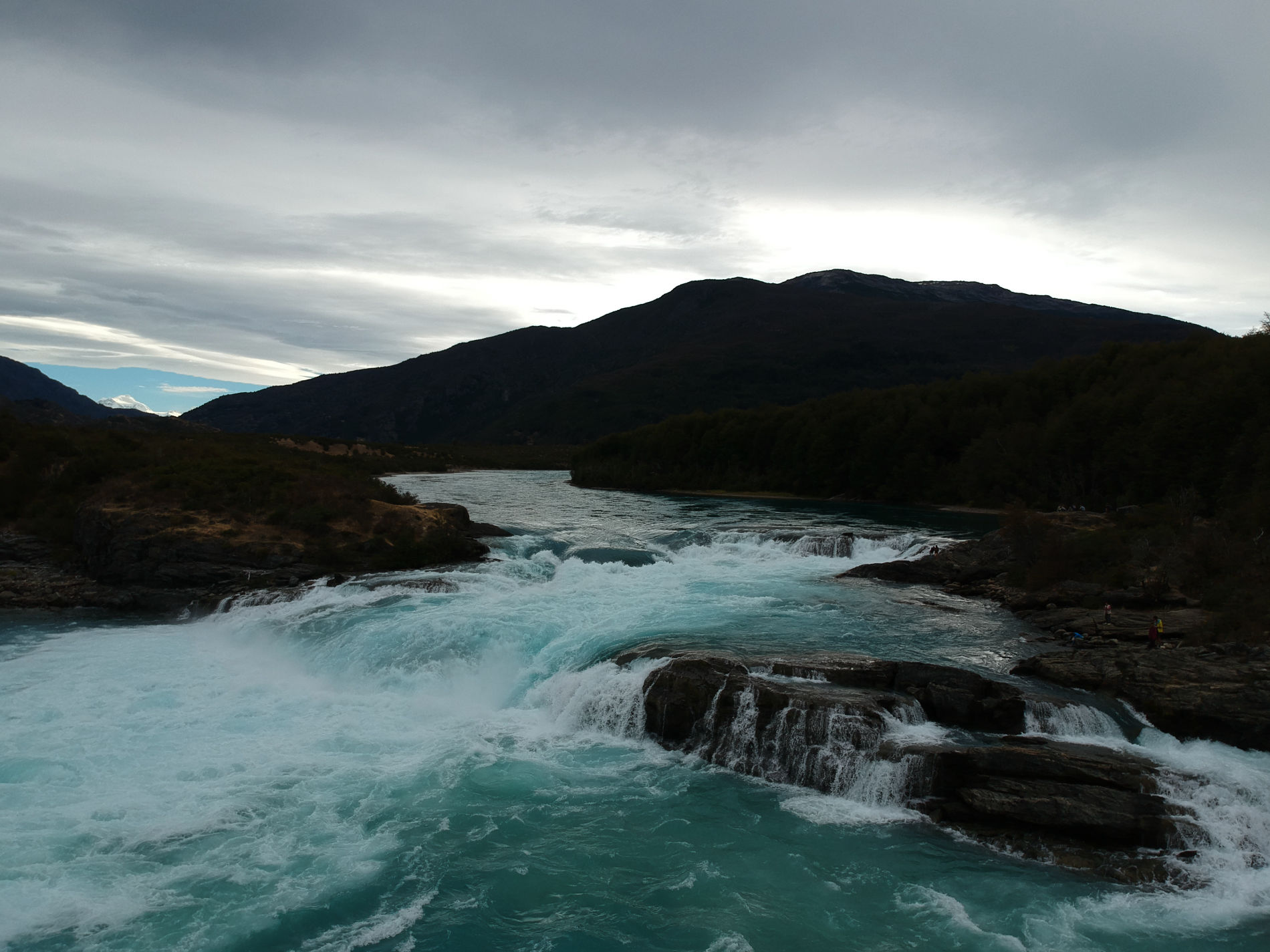
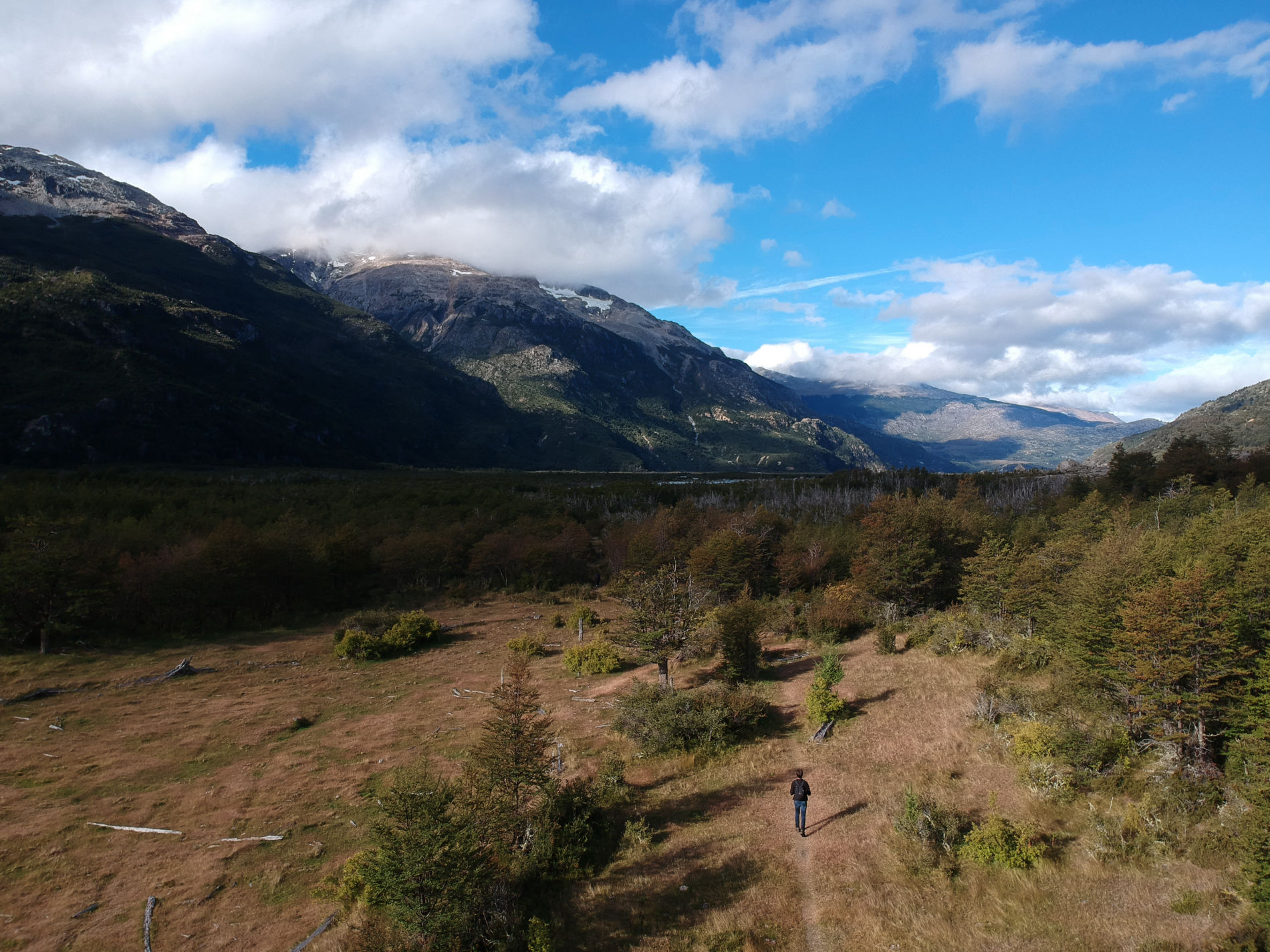
We spent our days hiking and exploring. After that we went for a detour to Foutalfu in the mountains. This is where we really started noticing that this region of Chile is not very well supplied with fresh produce. It became quite tricky to find fresh fruits and vegetables and that sentiment solidified as we headed further south. We spent a good amount of time around Lago General Carrera and the adjacent Lago Bertrand and Rio Baker, which offered some of the most spectacular nature we encountered on this trip. We spent nights in the tent at temperatures close to freezing followed by renting small cabins to warm up again. Waiting for the "tramite", or procedure, to have the car finally in our name completed so that we may cross the border into Argentina. 

II. Argentina & Uruguay

Experiencing the Gaucho way of life and the vibrant cultural scene of Buenos Aires.

Argentina_Uruguay_map

From Patagonia to Buenos Aires, a detour to Uruguay and up to the northern regions of Argentina

So, after a week or two of waiting, all papers were in order and we were ready to cross the border. By the time we were getting impatient, especially as food was not great and it is so dear to us.

Crossing the border was not an issue (despite of the grey legal situation described at the beginning of this report). Border officials were friendly and we were welcomed with De Musica Ligera by Soda Stereo blasting out of the border post's loudspeakers. Emotional moment! The only thing we were reminded of was that under no circumstances we could bring our apples with us, so we ate them on the spot. After crossing the border we stopped in the first town for breakfast and having a service reminding us of a cafe in good old Europa was something special after having spent several months in "the wilderness". 
Nature had some offerings but nothing compared to what we had seen in Chile. The landscape on the Argentinean side is more flat and desert like. Long hours sitting in the car driving on perfectly straight lines of tarmac.

Having already seen Bariloche and parts of the famous Routa 40 we decided to drive along the coast. Probably a mistake as it really was quite boring, with a few exceptions such as Peninsula Valdes. We advanced relatively quickly until nature turned green again. Viedma is noteworthy for a peculiar reason: looking for activities we somehow came across incorrect information that a local brewery, GΓΌlmen, would offer tours. We felt something could not be right when the "brewery" turned out to be located in the basement of a residential building. Oh well, why not just knock the door? While we were assured that they do not have capacity to do tours of what looked to be a two-person operation, we were shown and explained everything and invited to taste every single beer they make. What incredible hospitality!

We continued north towards Buenos Aires and stopped in nice areas known for hiking, went horse riding, and enjoyed great food and wine. In Buenos Aires we rented an apartment for a month to build a break into our overlanding trip, something we had planned since the beginning. We absolutely loved it!

Re-energized and able to absorb again travel impressions we hit the road again. First we went to Uruguay to see the beaches and visit friends living in Montevideo. We had a bit of bad luck and our two weeks there were filled with rainy days.

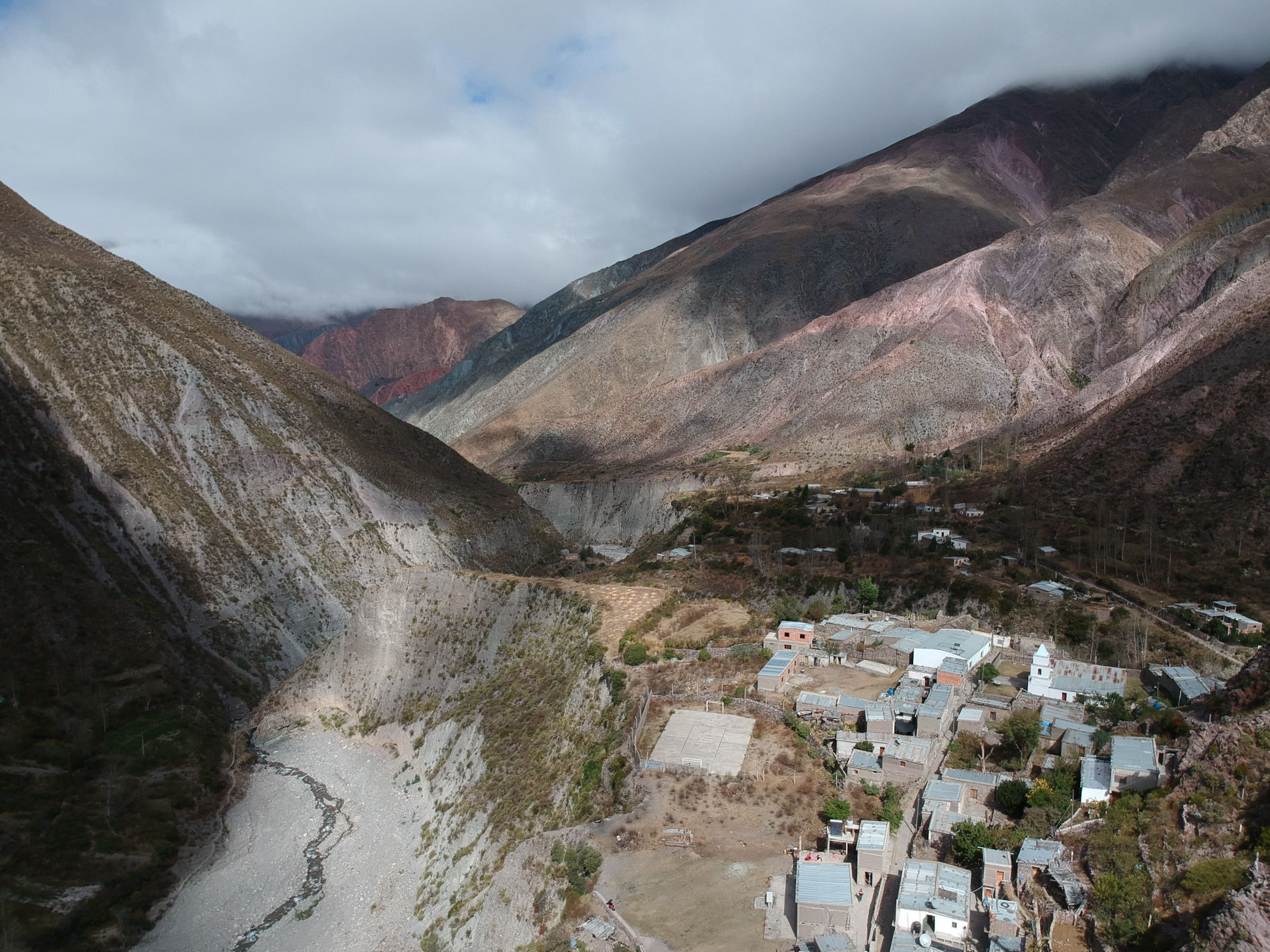
On the way north we came across small towns, such as Victoria, and a large city, Cordoba. Somehow both these places were special. We do not generally like to spend time in cities while overlanding. These two we loved though. After Cordoba the landscape became hilly again, and a bit colder, which was very welcome. We went to La Rioja and then Tafi del Valle. At some point hills turned into serious mountains and we knew we had reached Salta. We decided to drive up to Iruya, a high-altitude village, to finally find again proper hiking.

III. Bolivia & Peru

Beautiful colonial architecture, interesting cultural encounters, and literally breathtaking moments.

Map_bolivia_peru_overlanding

From Argentina's northernmost Province, Jujuy, crossing through Bolivia's Altiplano to Titicaca lake, onto Peru and its most famous sights, before returning back into Chile

Theoretically, crossing borders in most of South America is a piece of cake. Especially if you have the right passport. Annoyingly, my better half did not yet have her European passport at the time. Go figure how you get copies and printouts of your documentation necessary for your visa on arrival on a Sunday afternoon in the sleepy town of La Quiaca! A good starting point is the local bar. After hitting the "Ruta 40" we learned that the guy selling poultry may have a copy machine, so we gave it a shot. We probably woke the poor guy from his siesta as he looked sleepy when opening the closed store. Done. Next, we went to the border and thought that would now be easy. No, because they would not accept 100 USD in five bills of 20. Only a crisp 100 bill would do, or then local currency. Well then, I left woman and car behind and walked (without my passport) over the bridge into the Bolivian town Villazon to get cash. None of the money exchangers would exchange the 20 bills to a 100, of course. No choice but to trek to the other side of town to find an ATM that 1) works and 2) accepts any of my cards. The third try was successful and as it got dark we decided to book a hotel in town for the night.

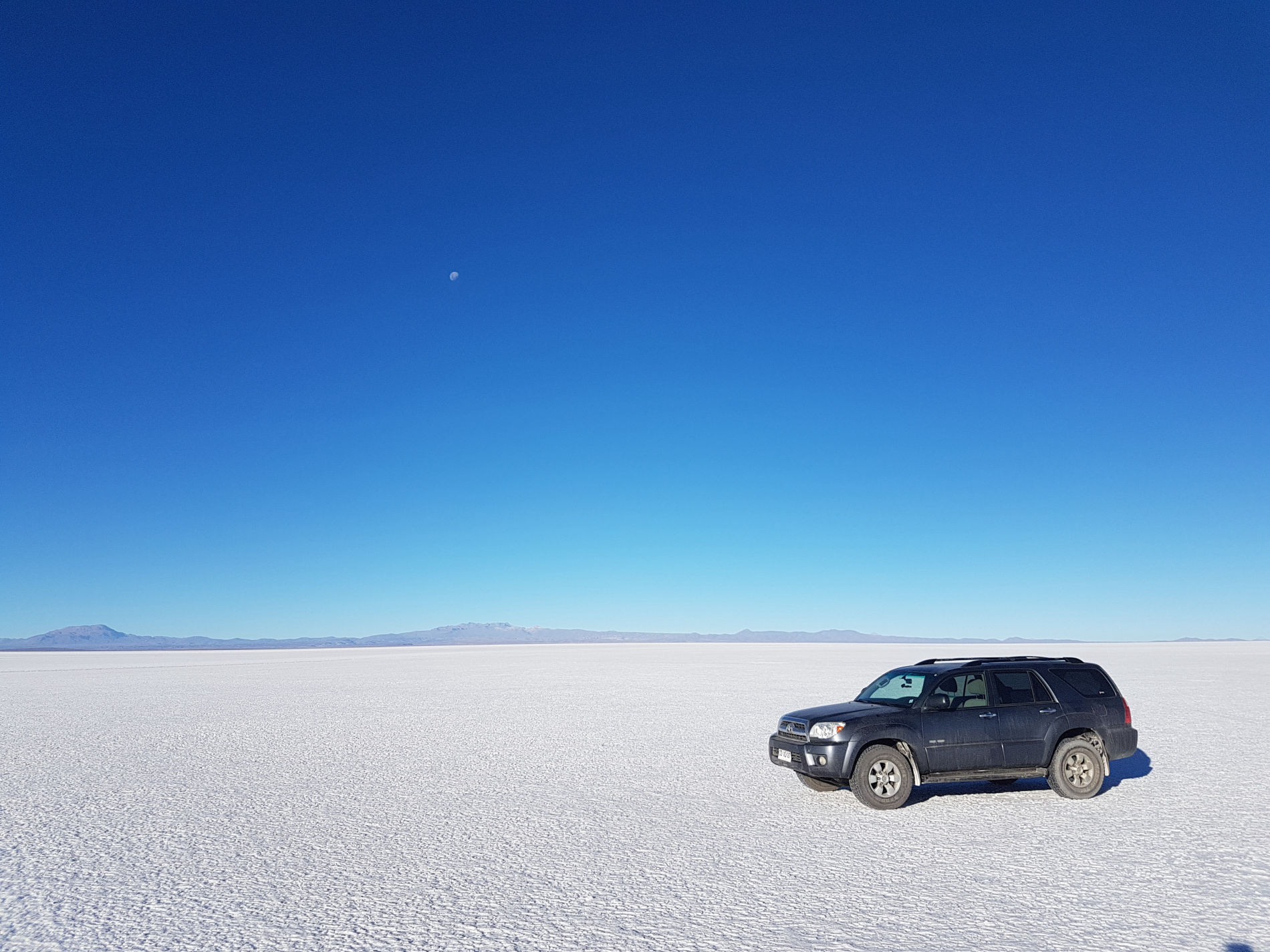
From there we went directly to the Salar de Uyuni, where I got the car "prepped" for a drive on the salt flat. This involves spraying a mix of diesel and other ingredients on the bottom of the car and any other parts risking to get in tough with salt. We want to keep the car in good shape for the next owner. Needless to say, cruising over the flats in our own car was amazing.

On to Potosi and Sucre, where I got salmonella. Yes, I tend to take too much risk with food poisoning when traveling, I just cannot say no to yummy things, even if I could not eat Indian food for about 5 years after my last trip to India. Once back on track (the entire neighborhood knew about the gringo with bad diarrhea), we went on to Inkallaqta, where things got really interesting. This is a region visited much less by travellers, which is absolutely my taste. We witnessed an impressive natural spectacle here, as clouds from the humid lowlands meet the extremely dry air from the Altiplano, resulting that when the wind blows in the right direction, the clouds are "eaten" by the dry air when coming over the mountain ridge. I have never seen anything like it before.

We then headed east, hiked the mountains nearby Cochabamba (first time I hiked above 5000m altitude!) and went on to Coroico, home to the famous Ruta de la Muerte and a many coca farmer. Needless to say, we drove the Death Road, whose main danger consists of crazy tourists on bicycles crashing into you. We then went on to Sorata, omitting La Paz to the extent possible, to see yet another aspect of the country. We ended our stay in Bolivia with a couple of nights in Copacabana at Lago Titicaca.

After crossing into Peru, which I knew from an earlier trip, we went straight for Cusco, which we had on our list despite generally trying to omit bigger towns, especially if they are tourist spots. Would not have wanted to miss this one though! Our stay was very relaxing, especially after Bolivia, which was a bit more harsh in terms of climate (dry, cold) and food (sometimes limited choice, though not bad!). We next wanted to see Machu Picchu, having discarded the idea to go there on my earlier trip, because too touristy. This time I wanted to see it. We made the conscious choice not to go to car-free Aguas Calientes so that we could limit our exposure to mass tourism to the extent possible, and instead drive up to Santa Teresa and hike up from there. We did not regret our decision: a scenic drive, slightly thrilling due to the ravins and the bad road, and incredible hospitality at the hacienda we stayed at. And almost no tourists! After an intense day at Machu Picchu we stayed a couple of extra nights at the hacienda and learned how to pick and roast coffee and how to catch fish in the river above Santa Teresa. We caught none I think.

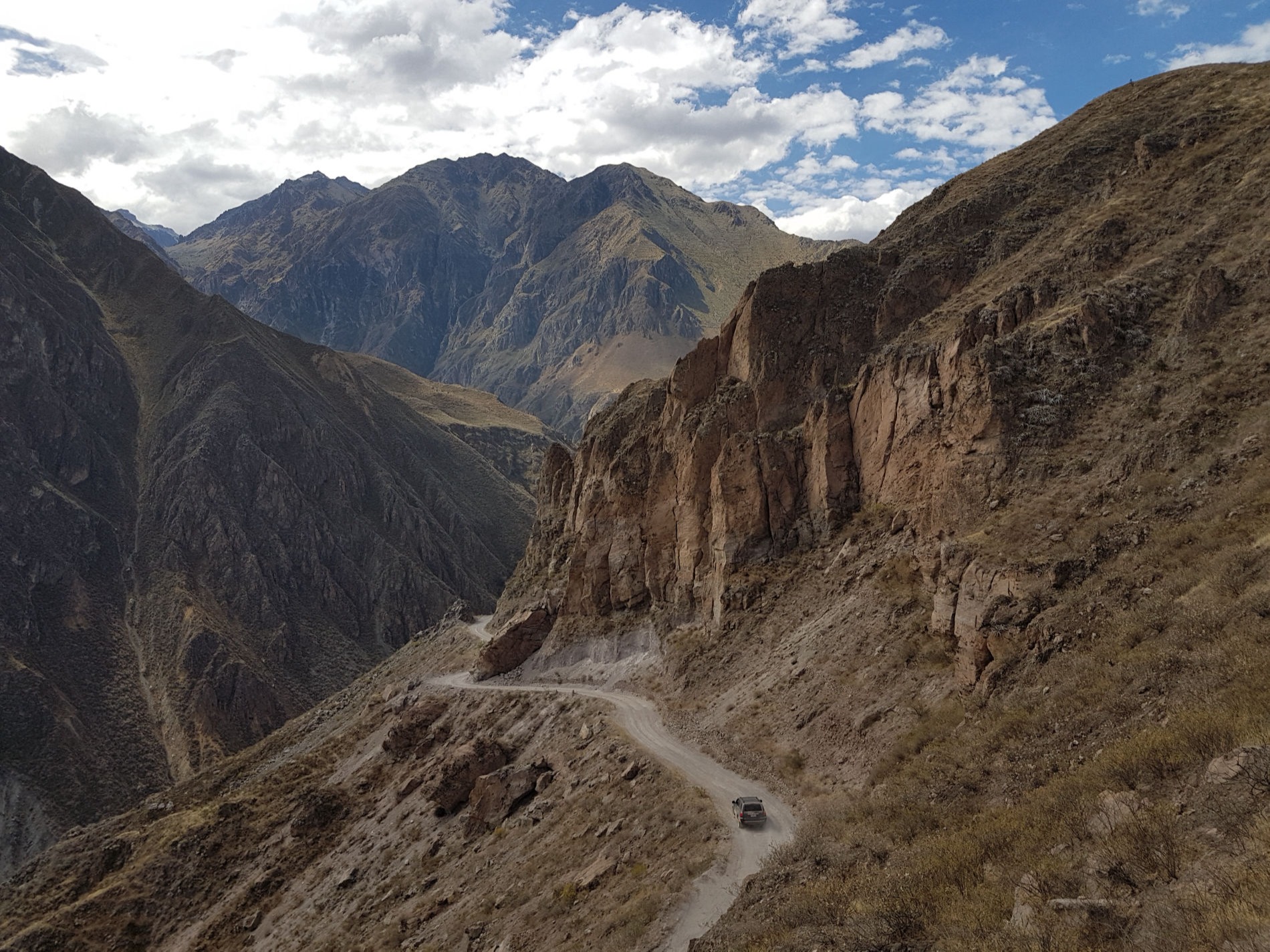
We went on to watch the condors and seek exciting off-road trails in Colca Canyon before heading to Arequipa and back to Chile. We did not have enough time to go further up north and will keep that for another trip.

IV. Northern Chile

Beautiful  mix of desert and valleys.

Chile_north_map

From Chile's northernmost city, Arica, past the famous Desierto de Atacama, through beautiful valleys in the north, back to Santiago to end the trip

Driving back into Chile felt like coming home: roads are spotless and drivers are just very respectful and calm, which we had not seen in months. Really different worlds. The border crossing was interesting, too, as we were sent from one window to another as no one seemed to be in charge of dealing with foreigners with a local car (or was it my better halves' passport?). It went so far that UNHCR, present at the border due to the high volume of Venezuelan citizens moving to Chile, offered their help thinking we were Venezuelans, too. The only thing that got worse was food, we already missed our ceviche.

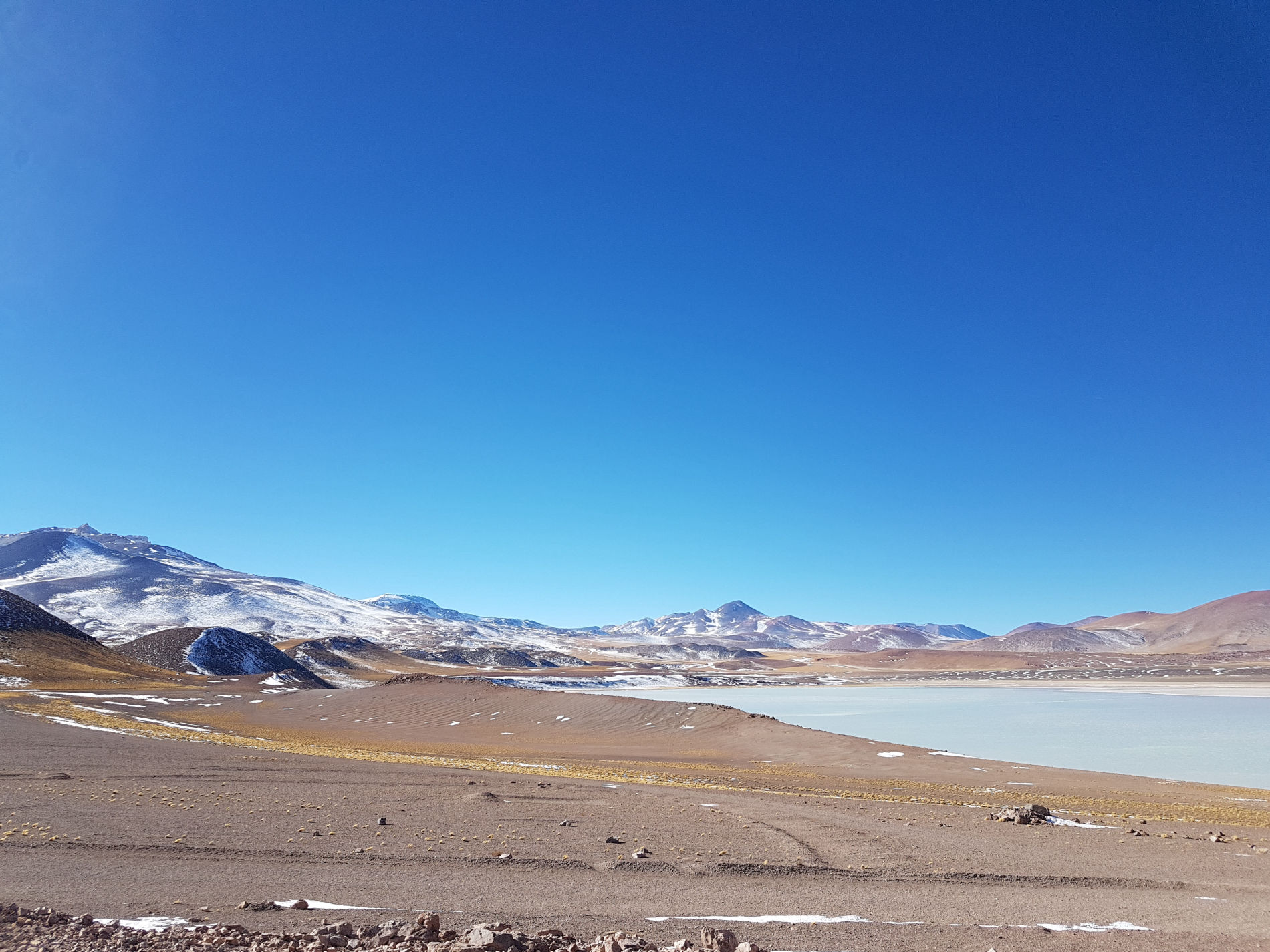
We went on to see the Atacama Desert, one of the world's driest places in the world. Along the way we saw multiple observatories on the hills: the conditions are perfect to observe stars at night. Exploring the area we learned one more lesson: desert does not mean hot. We found ourselves wearing shorts in patches of snow. Quite ridiculous.

From Atacama we wanted to cross once more into Argentina to spend a couple of days in the beautiful town of Mendoza. Unfortunately, the day we wanted to cross borders there was an accident on the main route to Argentina, route 27. We decided not to wait any longer and take the more adventurous route 23 so that we would reach San Antonio de los Cobres in Argentina before nightfall. After many hours of unpaved road through high altitude we reached the joint border post. No amenities along the way (no gas station!), no mobile data connection. Our passports had already been stamped out by Chile and stamped in by Argentina (bienvenidos!), when the Chilean customs officer refused to let us take our car into Argentina. Hard to argue and negotiate if you do not even have access to the internet! We gave in and returned all the way back to the not so charming mining town Calama.

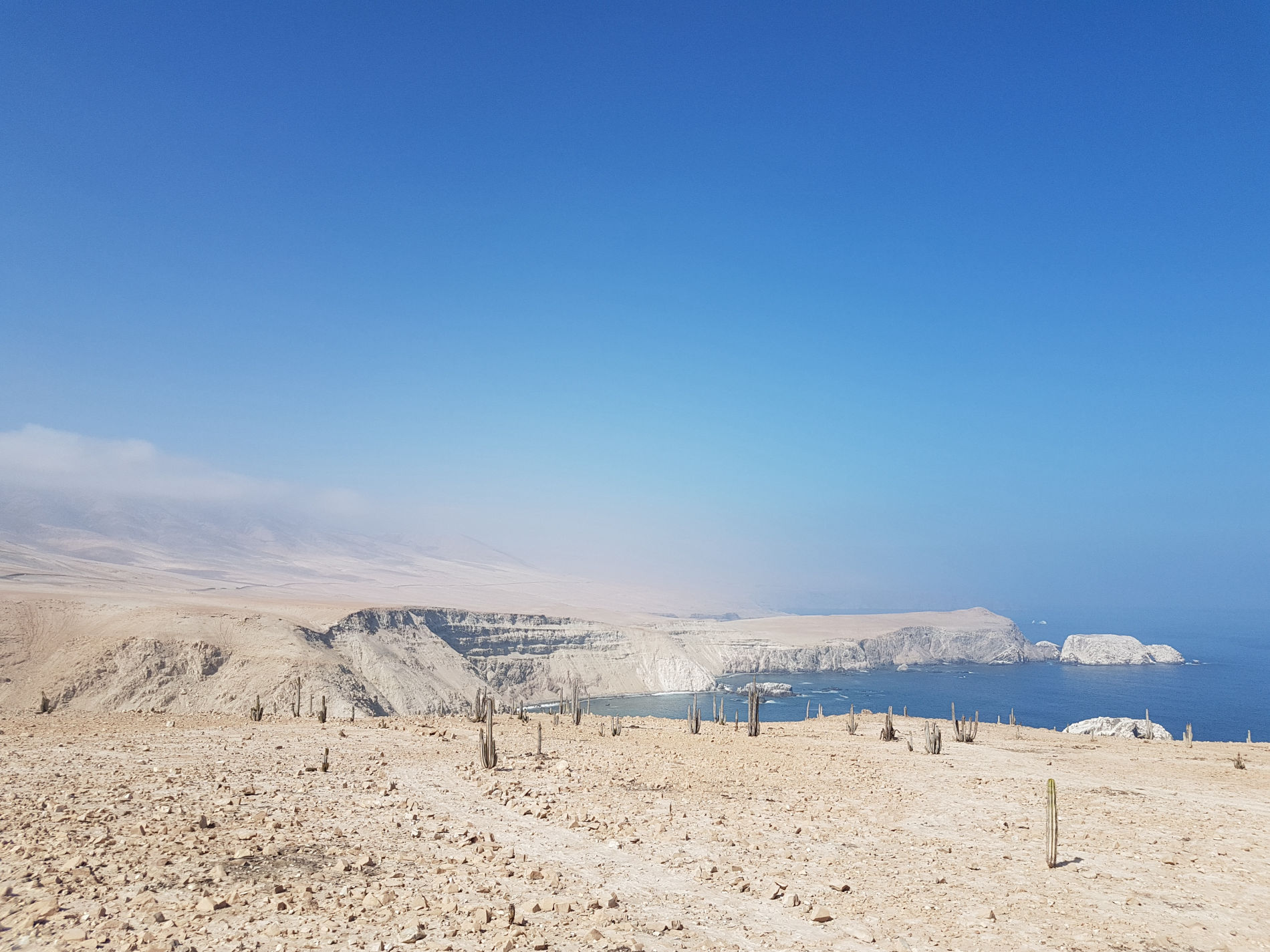
Oh well, change of plans. We did not try again via the potentially open route 27 and decided to spend the remaining days in the valleys of northern Chile, which are also known to be charming. Part of the reason was that we were not sure whether snow conditions on Ruta 60 connecting Mendoza with Santiago further south would let us allow to get back to Chile to sell the car and catch our flight in time. So we drove south, enjoyed a couple of days at the beach, explored several valleys, including Rio del Carmen and Elqui valley, before heading back to Santiago. It was great to reunite with friends we made at the beginning of the trip and to experience another season in Santiago, winter. One memorable moment was when we sold off all of our camping equipment over Marketplace: no matter that some things were bent and broken (despite us being careful), every single item found very happy buyers. I am happy we let the gear at only symbolic prices and I like to believe that people needing it the most actually got it. And this was the bitter sweet end of this adventure!